Group Captive Solar : The Smartest Way for Businesses to Reduce Electricity Costs in 2026

Electricity is no longer just an operating expense. For many industries, hotels, cold storages, food processors, manufacturers, IT parks, and commercial facilities, power costs directly affect profitability.
As grid tariffs continue to rise and sustainability targets become more important, businesses across Maharashtra are exploring a powerful alternative: Group Captive Solar Power.
For companies consuming more than 50,000 units of electricity per month, Group Captive Solar can often reduce power costs by 20%–50% while providing long-term price stability and supporting ESG goals. The model has become one of the fastest-growing renewable energy procurement mechanisms in India.
What is Group Captive Solar?
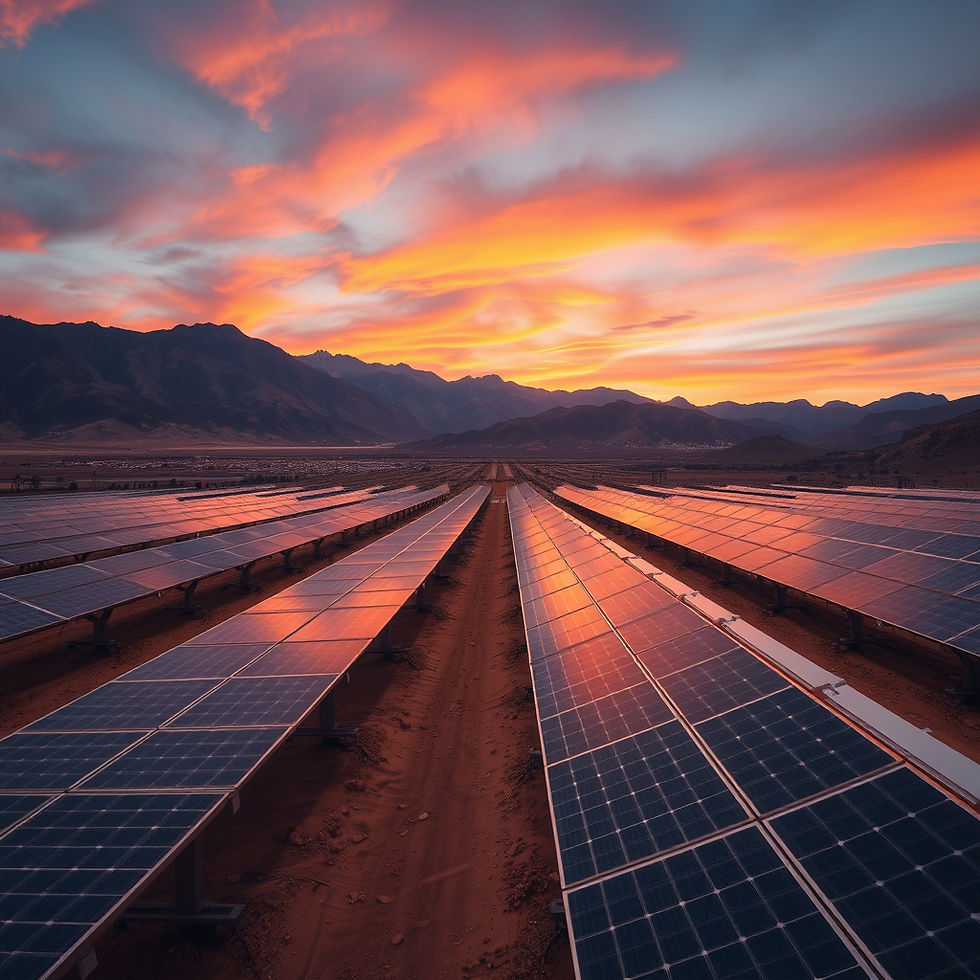
Group Captive Solar is a renewable energy ownership model where multiple businesses jointly invest in a solar power project and consume the electricity generated by it.
Under India's Electricity Rules, participating consumers must collectively:
Own at least 26% equity in the project.
Consume at least 51% of the power generated annually.
When these conditions are met, the project qualifies as a Group Captive Power Plant and receives significant regulatory benefits.
Unlike rooftop solar, the power plant is usually located offsite in a high-solar-generation area and the electricity is delivered through the Open Access network.
Why Maharashtra Businesses Are Switching to Group Captive Solar
Maharashtra has some of the highest industrial electricity tariffs in India. Manufacturing facilities, hotels, hospitals, educational institutions, warehouses, and commercial buildings often pay between ₹8 and ₹13 per unit depending on category and location.
With Group Captive Solar, businesses can access renewable energy at substantially lower effective costs while locking in predictable power rates for 15–25 years.
Key Benefits
1. Significant Electricity Cost Savings
One of the biggest attractions of Group Captive Solar is lower landed power cost.
Many projects deliver power in the range of ₹4–₹6.5 per unit depending on location, project size, and regulatory conditions. This can translate into substantial annual savings for energy-intensive industries.
2. Protection Against Future Tariff Increases
Grid electricity prices rarely move downward.
A long-term solar power agreement allows businesses to stabilize energy expenses and improve future financial forecasting.
3. No Rooftop or Land Requirement
Many factories, hotels, and commercial buildings have limited rooftop space.
Group Captive Solar allows organizations to benefit from solar power without owning land or installing large systems on-site.
4. ESG and Sustainability Compliance
Customers, investors, lenders, and international buyers increasingly evaluate environmental performance.
Group Captive Solar helps organizations:
Reduce carbon emissions
Improve ESG reporting
Meet Renewable Purchase Obligations (RPO)
Support Net Zero commitments
5. Scalability for Growing Businesses
Unlike rooftop systems, Group Captive projects can scale as power demand increases.
Multiple facilities within a state can often be served from a single project, simplifying renewable energy procurement.
How Does Group Captive Solar Work?
Step 1: Formation of a Special Purpose Vehicle (SPV)
An SPV is established to own and operate the solar project.
Step 2: Equity Participation
Participating businesses invest in the project and collectively maintain the required ownership percentage.
Step 3: Power Purchase Agreement (PPA)
Consumers sign long-term agreements to purchase power generated by the plant.
Step 4: Open Access Transmission
Electricity is injected into the grid and wheeled to consumer locations using Maharashtra's transmission infrastructure.
Step 5: Compliance Monitoring
Annual reviews ensure that ownership and consumption criteria continue to meet Group Captive requirements.
Example Savings Calculation
Consider a manufacturing facility in Maharashtra consuming:
Monthly consumption: 5,00,000 units
Existing tariff: ₹10/unit
Annual electricity cost: 5,00,000 × 12 × ₹10 = ₹6 Crore
If Group Captive Solar delivers power at ₹6.25/unit:
Annual electricity cost: 5,00,000 × 12 × ₹6.25 = ₹3.75 Crore
Annual savings: ₹2.25 Crore
Over a 20-year project life, savings can exceed ₹40 Crore depending on tariff escalation and project structure.
Who Should Consider Group Captive Solar?
Group Captive Solar is ideal for:
Manufacturing Units
Engineering Industries
Food Processing Plants
Cold Storages
Hotels & Resorts
Educational Campuses
Hospitals
Warehouses & Logistics Parks
Commercial Complexes
IT & Data Centers
Agro Industries
Industrial Parks
Group Captive vs Rooftop Solar
Parameter | Rooftop Solar | Group Captive Solar |
Land Requirement | On-site | Off-site |
Ownership | Single consumer | Multiple consumers |
Capacity Expansion | Limited | Highly scalable |
Capital Requirement | High | Shared |
Energy Savings | Moderate | High |
Suitable for Large Loads | Limited | Excellent |
Multi-location Supply | No | Yes |
Key Risks to Evaluate
While the model is highly attractive, businesses should carefully assess:
State Open Access regulations
Banking policies
Transmission charges
PPA obligations
SPV governance
Compliance with 26% ownership and 51% consumption rules
Developer track record and project performance guarantees
Failure to maintain captive compliance can impact financial benefits.
The Future of Group Captive Solar in India
India's renewable energy transition is accelerating rapidly, and Open Access solar capacity continues to grow as businesses seek cost-effective clean power solutions. Large corporations, manufacturers, and even residential communities have begun adopting the Group Captive model to gain greater control over energy costs while reducing carbon emissions.
For Maharashtra businesses facing rising electricity bills, Group Captive Solar represents one of the most compelling opportunities available today.
Why Work With The Green Bein?
At The Green Bein, we help businesses evaluate, structure, and implement Group Captive Solar projects across Maharashtra and India.
Our services include:
Energy consumption analysis
Open Access feasibility studies
Solar plant sizing
Financial modelling
Regulatory guidance
Installation and Commission
Project execution support
Long-term performance monitoring
Whether you operate a factory, hotel, warehouse, food-processing unit, educational institution, or industrial park, we can help determine if Group Captive Solar is the right fit for your organization.
Ready to Reduce Your Electricity Bills?
Contact The Green Bein for a free Group Captive Solar feasibility assessment and discover how much your business could save with renewable energy.
Keywords
group captive solar Maharashtra, group captive solar India, open access solar Maharashtra, captive solar power plant, industrial solar power procurement, commercial solar power Maharashtra, renewable energy for industries, solar open access Maharashtra, group captive power model, offsite solar power India, electricity cost reduction Maharashtra, solar energy for factories, solar power for hotels and resorts, industrial energy savings India, green energy procurement Maharashtra, solar power purchase agreement India, renewable energy compliance India, ESG renewable energy strategy, captive power regulations India, group captive solar benefits


Comments